


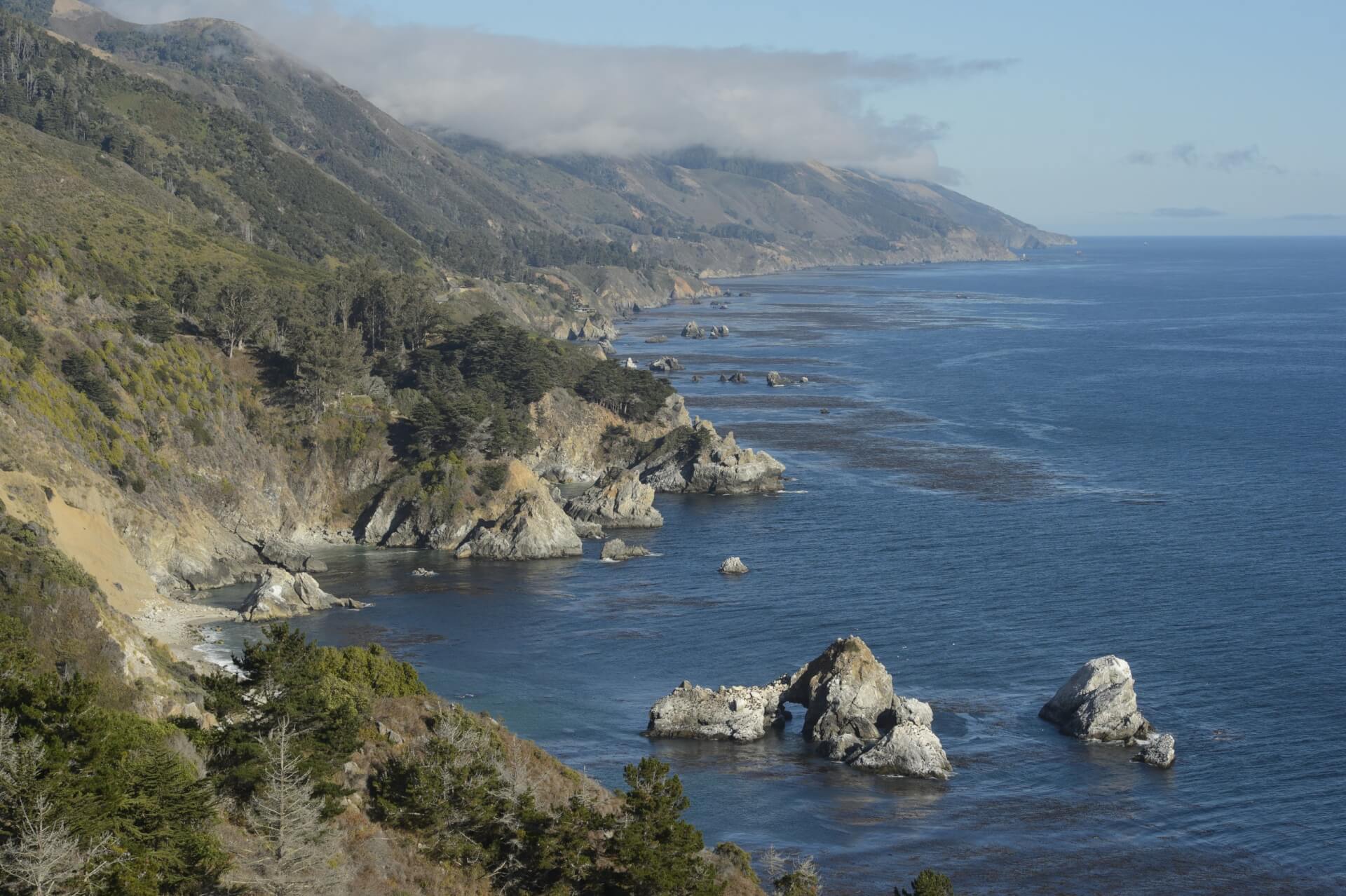
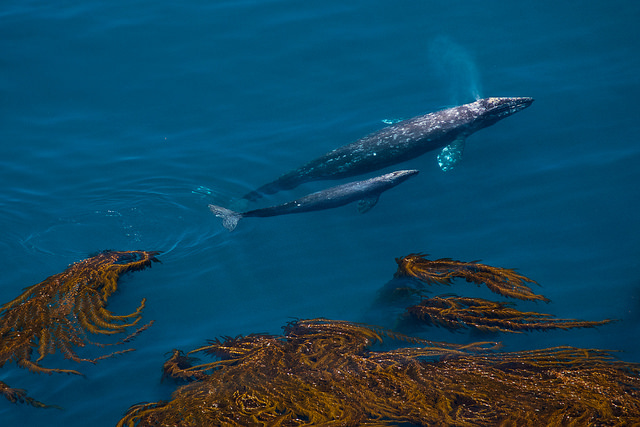
Monterey whale watching is a year-round activity due to the incredible depth of the Monterey Bay Canyon, which provides an amazing habitat for many whale species to come close to shore to feed. The diversity of Monterey Bay is amazing, with humpback whales, blue whales, gray whales and orcas (among other marine species) migrating seasonally through the area. Whale watchers on Monterey Bay can sometimes spot a fin, minke or sperm whale, and the rarely observed beaked whale, which dives for up to an hour at a time, has also been known to make a cameo appearance.
Whale Watching Tours
Visitors have called the experience of whale watching "life-changing" and say it gives them a new perspective on our oceans. Book your whale-watching tour with local tour operators to view whales with expert naturalists who understand the Monterey Bay.


Whale Watching Tips
Monterey's knowledgeable whale watch leaders have several tips for novice whale watchers:
- Plan Ahead: Make reservations in advance directly with our whale-watching tour operators, as trips can fill up fast. Take note of new safety and health protocols upon booking and follow guidelines accordingly.
- Dress Warm: Even if the weather seems warm on the dock, the ocean air can get frigid, so be sure to wear multiple layers.
- Wear Flat, Rubber-Soled Shoes: The deck is likely to get wet as you sail and a wet deck is a slippery deck.
- Take Sea-Sickness Medication: Prepare for your excursion by taking seasickness medication at least an hour before boarding your boat. This will give the medication time to take effect and ensure that you can enjoy the whale watch without getting queasy.
- Secure Your Camera and Binoculars: Don't lose your favorite tech gadget to the sea! Make sure that your cameras, binoculars and other gear are strapped securely around your neck (or wrist, for shorter straps).
- Wear Sunscreen, Face Coverings and Shades: Hats, sunglasses and sunscreen are essential, as you can still get burnt even if the sun is not visible.
Best Times to Whale Watch in Monterey
January is the peak of the great gray whale migration as thousands of these majestic creatures travel through Monterey Bay on their way to Mexico for breeding and calving. While gray whales can be spotted during the migration in Monterey County, other species of whales and dolphins can be seen throughout the year including blue whales, humpback whales, fin whales, minke whales, sperm whales, orcas, northern right whale dolphins, Risso’s dolphins and many more species.
Whale Watching Times At a Glance
- The best time to see blue whales in Monterey Bay is July through October
- The best time to see killer whales in Monterey Bay is mid-April through mid-May and late August through October
- The best time to see gray whales in Monterey Bay is December through April, with peaks in January & March
- The best time to see humpback whales in Monterey Bay is year-round, with peaks in March through November

A number of whale-watching tour companies operate out of Monterey and Moss Landing. Sea captains take visitors out daily to observe these magical ocean creatures and educate guests on their behaviors and patterns. Several species of whales and dolphins are easier to spot in Monterey Bay due to one of the deepest submarine canyons on the West Coast– the Monterey Submarine Canyon. The canyon, which is twice as deep as the Grand Canyon, is just off the Monterey coastline and supports a variety of habitats as well as provides plenty of nutrients for marine mammals.

The exciting gray whale migration begins with pregnant mothers leaving the Bering Strait in October for Baja, Mexico. They are followed by the general population and then juvenile whales who all head south for the warmer waters of the lagoons in Mexico. By the third week of January, vast numbers of whales can be seen heading south. While daily sightings are highly probable, they cannot be guaranteed as these are wild animals.
But the fun doesn’t stop there, around mid-February gray whales can be seen heading north again to Alaska and continue to travel until April when the mothers return with their calves. The pairs must cross over the cavernous canyon where killer whales lie in wait and often attack the calves. Mothers can save their young if they can head to shallow waters and the chase is something incredible to see. It’s no fluke that people migrate to Monterey, the Whale Watching Capital of the World™!
Did You Know: The Gray Whale Migration on Monterey Bay

Every winter on Monterey Bay we have the wonderful opportunity to witness one of the largest migrations of mammals on earth.
Over 20,000 gray whales are headed toward Monterey as they come down from Alaska toward Mexico. Gray whales have the longest migration of any mammal on earth and cover an average of 5,000 miles round trip and it’s all in the name of breeding and calving.

One of the most incredible things about the gray whale migration is they don’t feed for the vast majority of their journey. These whales are cruising at a pace of around 4-5 miles per hour, but they swim non-stop, only slowing down to nap while still swimming. This means they are covering an incredible 100 miles per day!
In preparation, these whales gorge themselves all summer in their northern feeding areas; gaining as much weight as physically possible in preparation for a 3-6 month fast for the breeding season. Expecting whale mothers also fast during migration – which means fasting while pregnant, lactating and raising a baby whale!
There are two main reasons why gray whales forego feeding while traveling. First, it’s more efficient to travel at a steady pace without making stops – anyone who has been on a long road trip knows what I’m talking about. Second, there isn’t much food available to them once they leave their feeding grounds, providing even less of a reason to stop.
The first few gray whales are trickling past the coast already – get ready for the peak in mid-January! Look for them if you are near shore anywhere in the central coast area.