






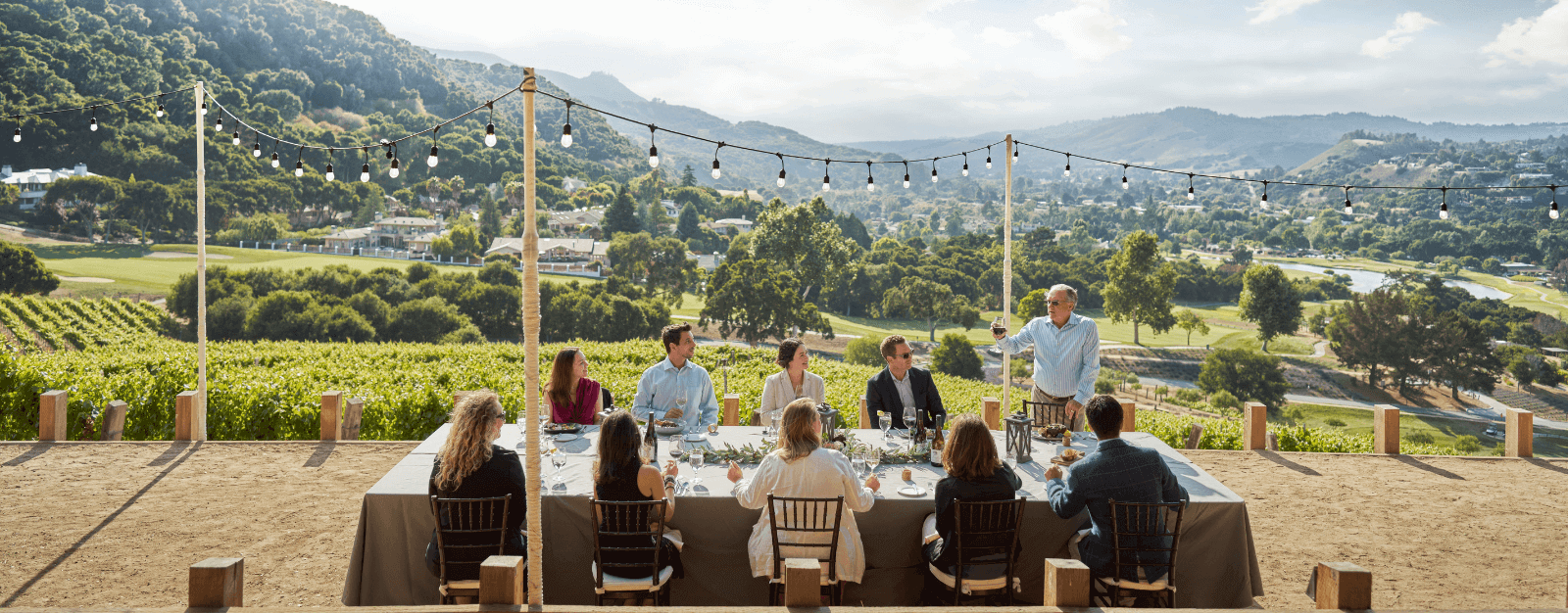

Interview with Neal Hotelling, Historian for the Pebble Beach Company
Inspired by America 250, Monterey 1000 broadens the lens to recognize histories that long predate the founding of the United States. Over the coming year, this ongoing series will explore those stories, starting with some of the earliest chapters and connecting them to what makes the destination distinctive today.

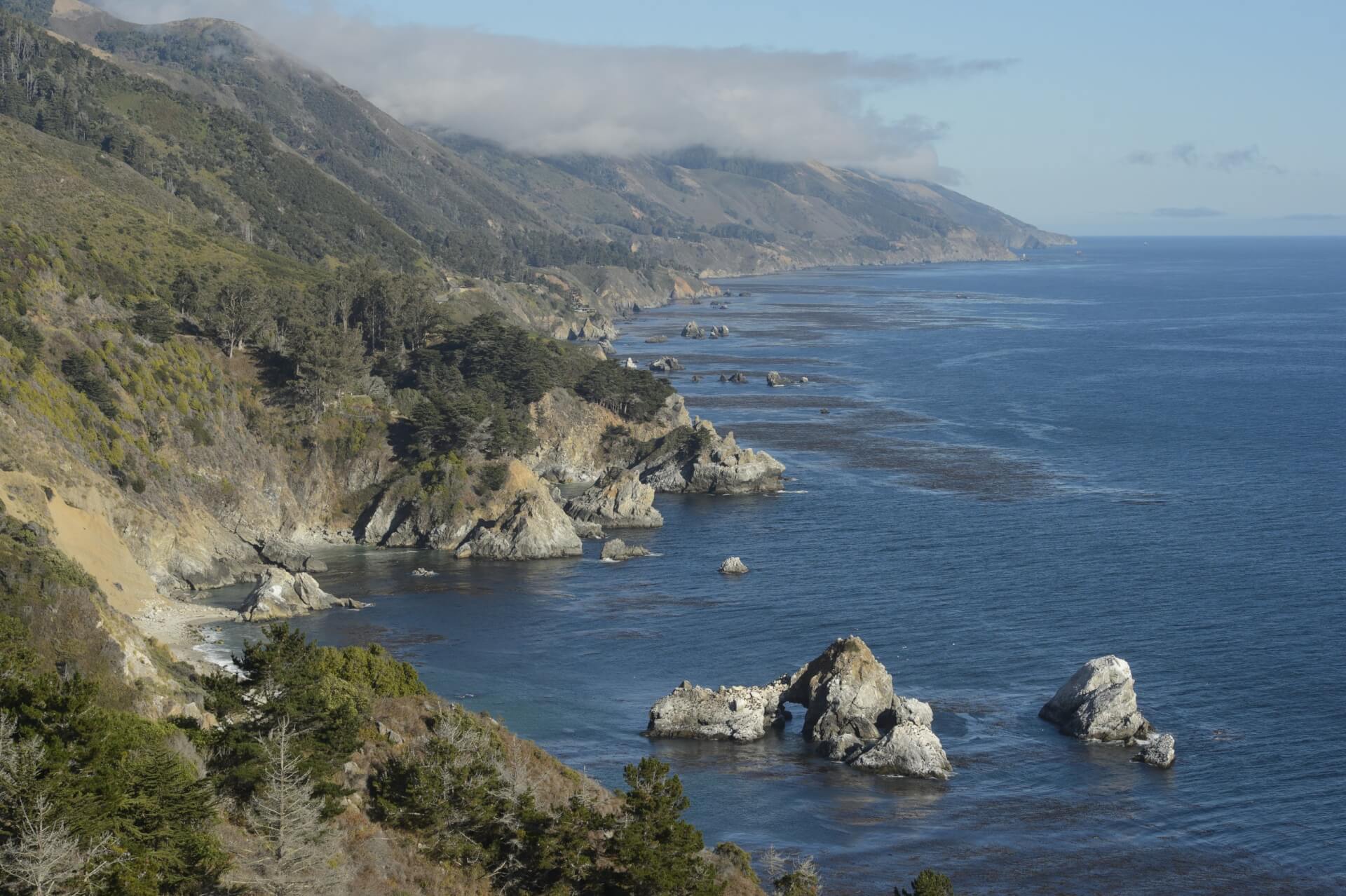
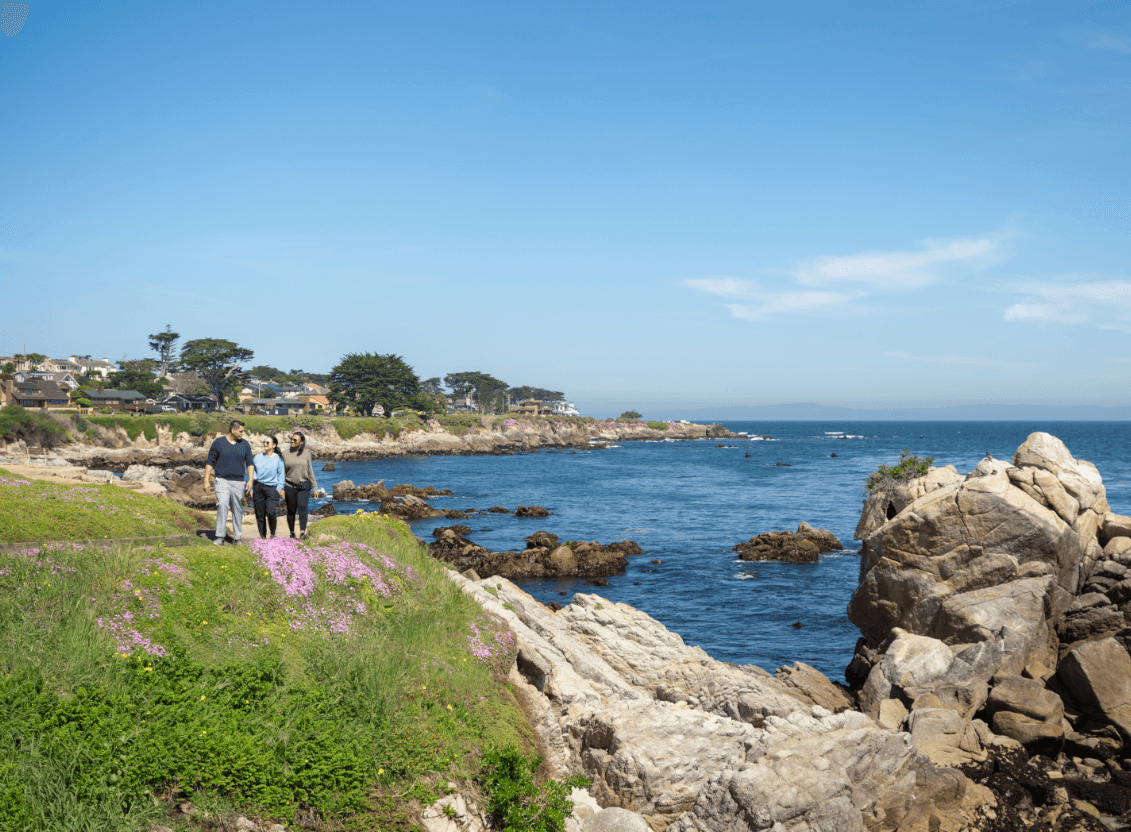
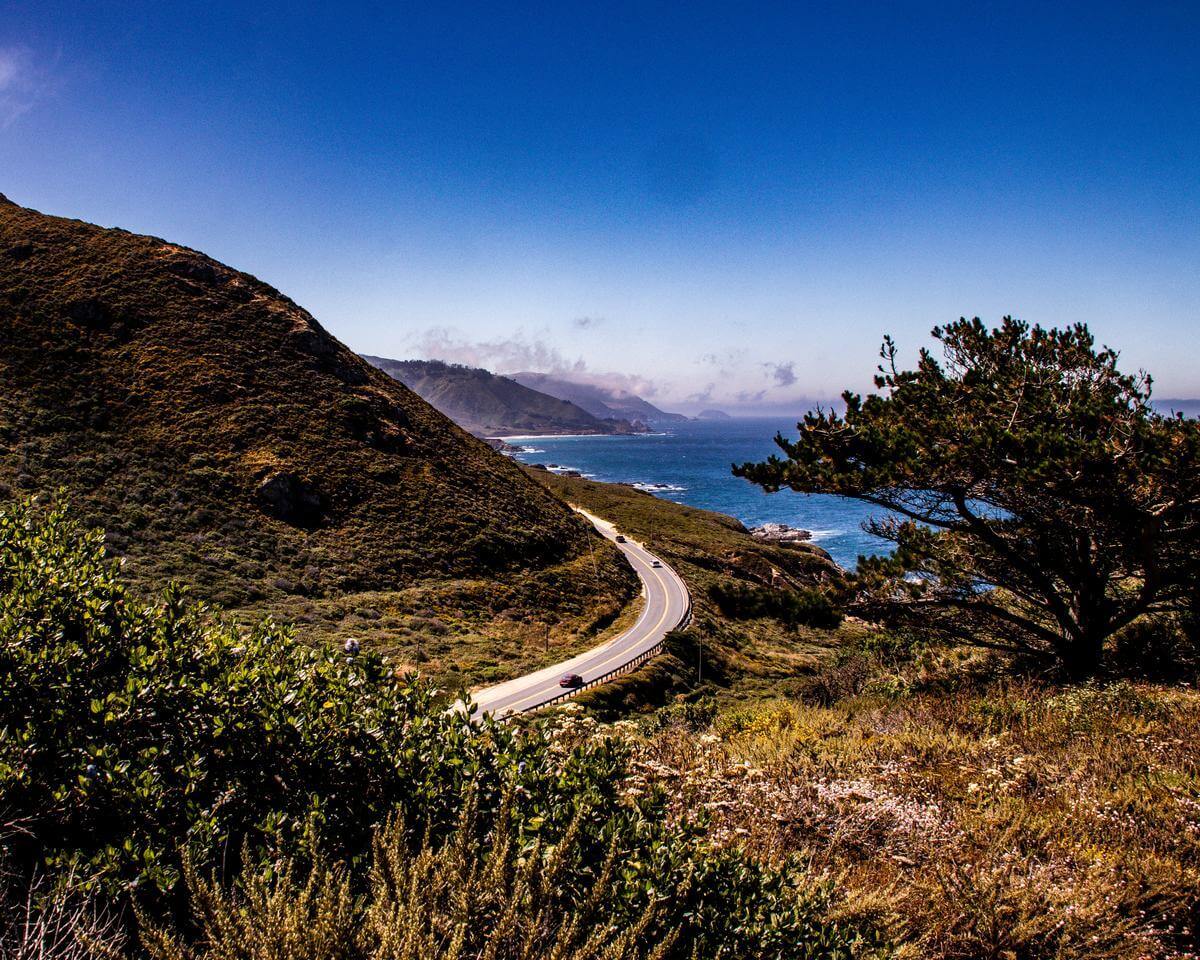
Rugged cliffs, twisted Cypress trees, blue skies and crashing waves. From sand to forest to sea, Monterey County is home to a wide array of beauty wherever you turn. It was this natural beauty that drew the “Big Four” of the Pacific Improvement Company: Charles Crocker, Collis Huntington, Leland Stanford and Mark Hopkins out to Monterey. Who would have known that this would eventually lead to the world-class golf courses you can experience today.
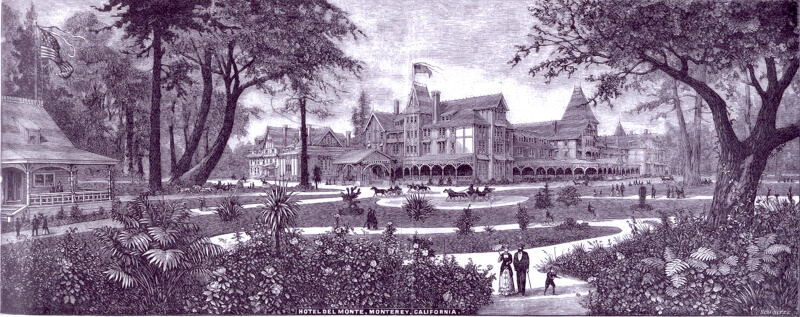
In 1880, Charles Crocker of the Pacific Improvement Company built what would become the most fashionable and luxurious hotel on the West Coast—in just 100 days. The Hotel Del Monte transformed Monterey County into a renowned destination welcoming presidents, dignitaries, celebrities, and travelers from around the globe. With racetracks, refined dining, beachfront bathhouses, field sports, and lush gardens sourced from six continents, it redefined “stay and play.” Attractions rose quickly around the hotel, creating an experience designed to entertain, impress, and enchant.
Land baron David Jacks held over 7,000 acres of land of the El Pescadero Ranch and Point Pinos Rancho —land that today includes Pebble Beach, Pacific Grove, and parts of Monterey. Jacks had trouble selling lots on the land and sold the entire land to the Pacific Improvement Company for $35,000.
With the new land, the Hotel Del Monte built the 17-Mile Drive as a way to highlight the coastal views for hotel visitors; a ride that initiated at the Hotel Del Monte in Monterey, with the Lone Cypress sitting roughly 8.5 miles in the middle of the route.
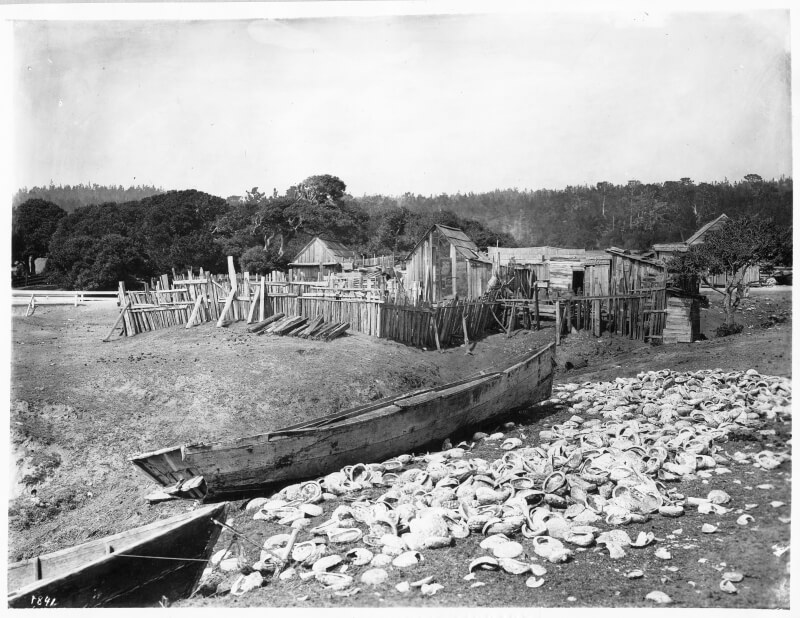
Chinese families who had previously leased land from David Jacks for fishing in El Pescadero Rancho adapted to the rise of tourism, selling abalone shells to visitors along 17-Mile Drive. The land that they once held their roadside abalone gift shop is now the 18th green at Pebble Beach Golf Links.
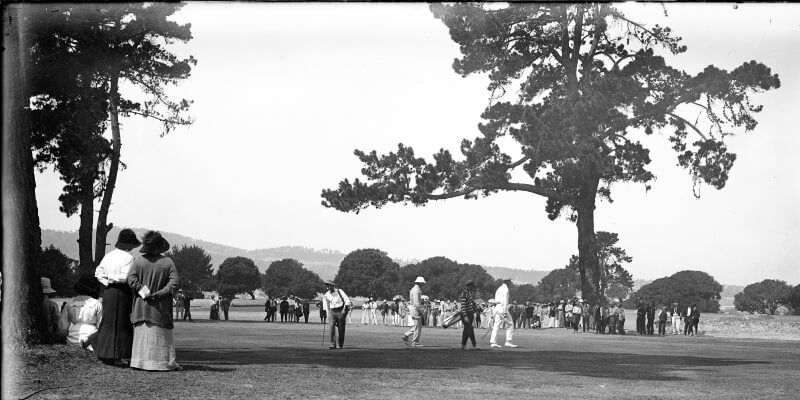
But in 1880, golf wasn’t played anywhere in America and Pebble Beach and Del Monte Forest were largely uninhabited. In the late 1880’s and early 1890’s, golf began to gain popularity in the United States and the Hotel Del Monte wanted to build a course for their guests. On May 1st, 1897, the nine-hole course at Del Monte Golf Course was built on land leased from David Jacks near the hotel in Monterey. Golf quickly spread and took hold in California. Since 1898, the Del Monte Golf Course served as the host for a number of men’s and women’s championships, including the California State Amateur Championships and Pacific Coast Golf Association (PCGA) Women’s Amateur Championships.
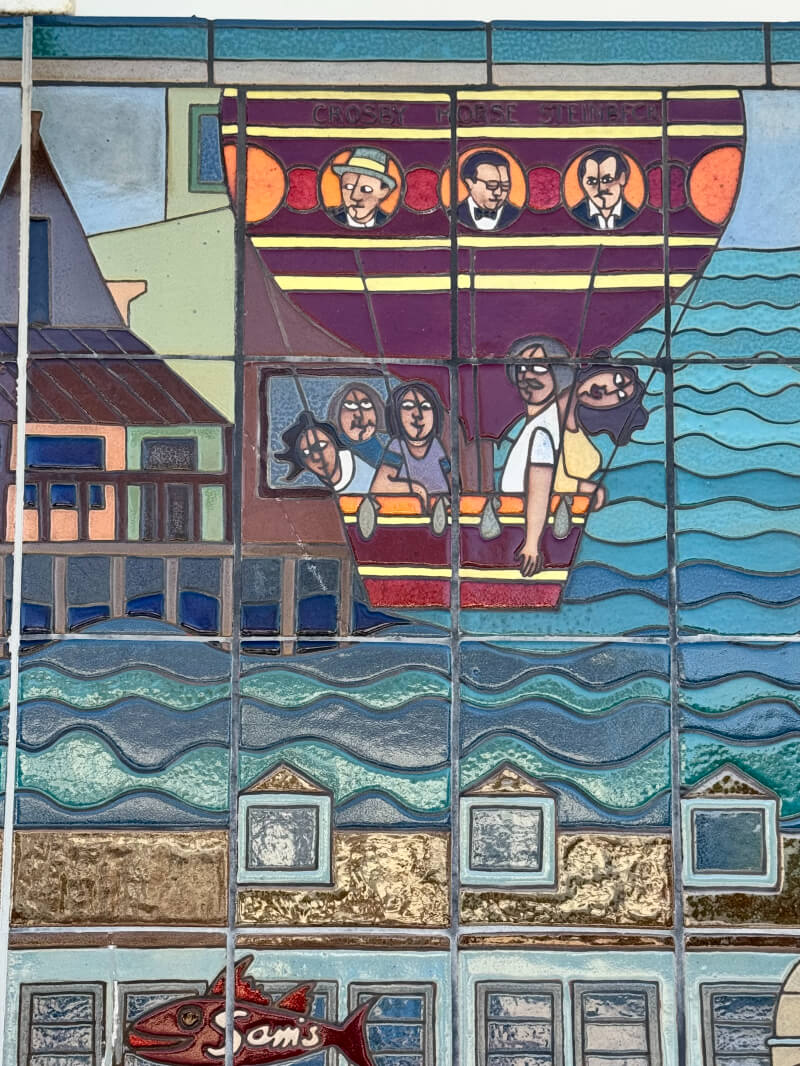
Historian Neal Hotelling notes that “the Monterey Mural by artist Guillermo Granizo highlights the three most important individuals in modern Monterey Peninsula history: Bing Crosby, John Steinbeck, and S.F.B. (Samuel Finley Brown) Morse.” Their faces sit on an air balloon, possibly taking Monterey to new heights.
Initially hired to oversee the Pacific Improvement Company and the vast real estate assets, S.F.B. Morse had a novel idea to increase interest in lots that had trouble selling within the relatively unsold Del Monte Forest and Pebble Beach lots. He proposed building a golf course—maintained by grazing sheep and designed by amateur golfers—to keep costs low while elevating the land’s appeal.
As a result, Pebble Beach Golf Links opened in 1919, designed by amateur golf champions Jack Neville and Douglas Grant. That same year, Morse purchased the company with the support and guidance of banker Herbert Fleishhacker for $1.4 million. The newly founded Del Monte Properties Company, today known as the Pebble Beach Company, included 18,000 acres of land encompassing the Monterey Peninsula, the county's water supply, and hotel, lodge and golf courses.
Pebble Beach Golf Links was not immediately successful, but Morse believed that by providing the best maintenance, hiring the best people to make changes, and hosting tournaments, the course would be successful. The sheep became a sidenote in Pebble Beach history as they were replaced by groundskeepers soon after opening, and the course was possibly the first fully irrigated course in the United States.
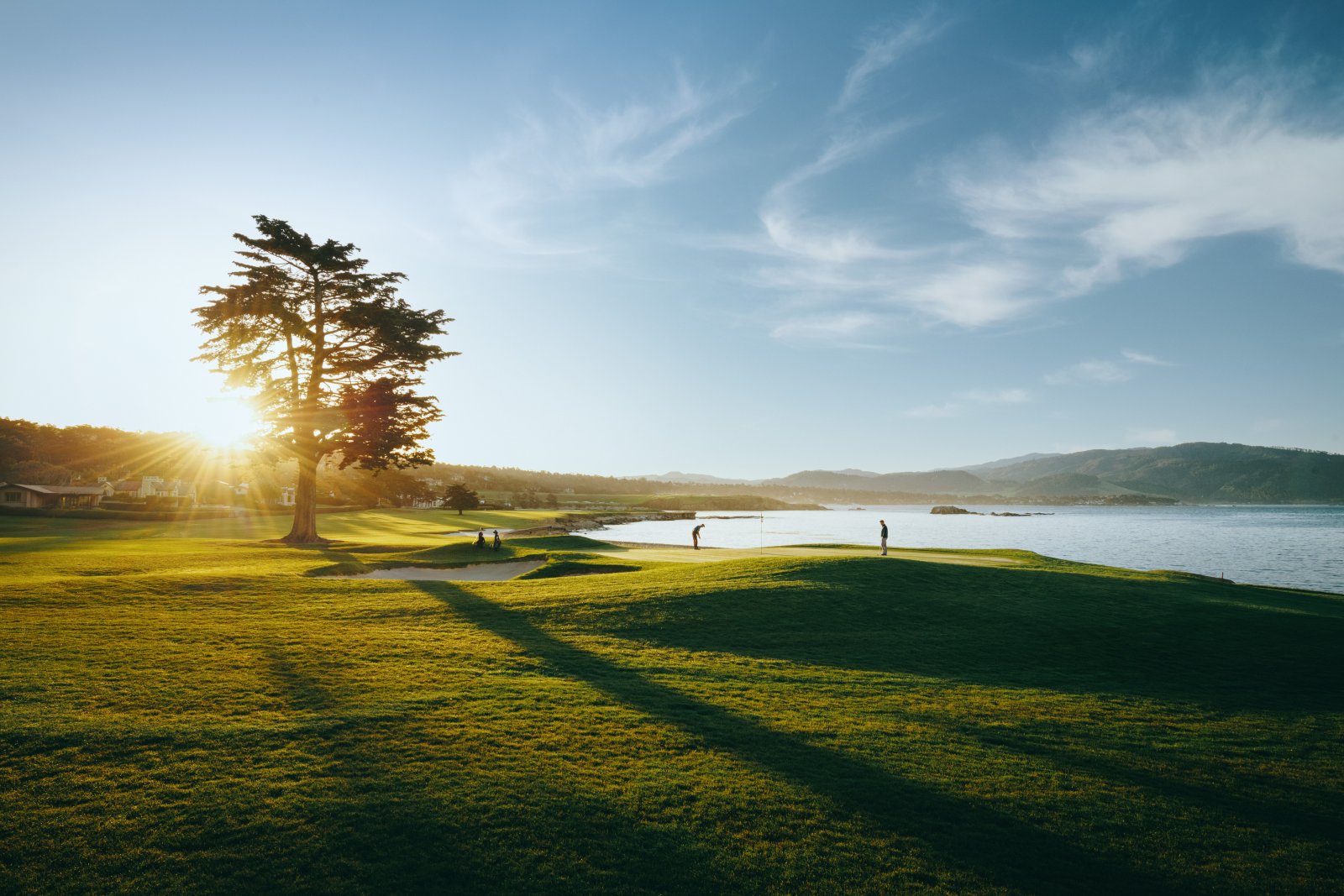
Players and the California Golf Association (CGA) long criticized the original 18th tee, a flaw that kept the course out of serious tournament consideration. The tee was updated by Arthur Hill “Bunker” Vincent and William Herbert Fowler from a 379-yard par 4 to a challenging 535 par-5 in 1922. The success of the 18th tee led the CGA and USGA to bring tournaments to Pebble Beach.
As Hotelling says, “Morse saw golf as a way to promote California and coined the term the Circle of Enchantment. He actively worked to bring people to California.” Morse hired photographer Julian Graham to document, highlight and promote the Del Monte Company. The Pebble Beach Company Archives are an expansive record of golf and automotive history thanks to the foresight of hiring company photographers, including Julian Graham, William C. Brooks and Joann Dost.
In 1932, Morse contacted the City of Pacific Grove with a plan to build a municipal golf course. For $10,000, the company sold the land and built a nine-hole course designed by H. Chandler Egan for Pacific Grove, with the agreement that they would continue to maintain the course for the public benefit. With nearby home lots available for sale, Morse again used this model to promote the company's real estate sales. By 1962, the Pacific Grove Golf Links course had been expanded to 18 holes, with a design by Jack Neville.
The Hotel Del Monte has a dramatic history of its own—burning down and being rebuilt multiple times before being leased to the United States Navy during World War II. After the war, Samuel F. B. Morse determined that the hotel no longer fit the company’s long-term plans and sold the property to the Navy.
Today, the former hotel lives on as Herrmann Hall, a central landmark of the Naval Postgraduate School, located within Naval Support Activity Monterey.
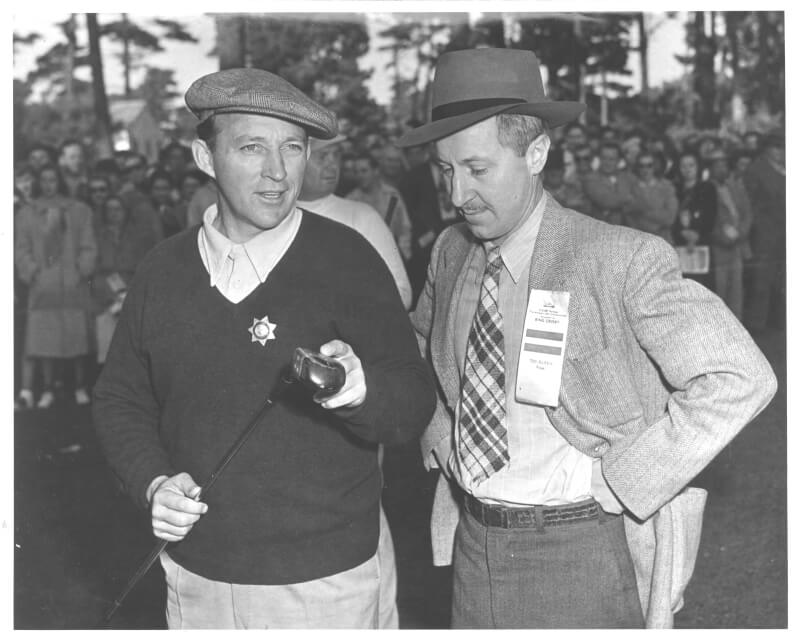
Enter Bing Crosby – creative genius, Oscar winner, Grammy winner, and radio host spanning the East Coast and West Coast. At the time, Crosby was one of the first stars to cross media boundaries, but was also a passionate sports fan and athlete. Along with horse racing and baseball, golf was a passion for Crosby.
Between 1936 and 1942, Crosby held the Crosby Clambake amateur golf tournament in Rancho Santa Fe, with a $500 purse, but it was suspended during World War II. After the war ended, Monterey Herald editor Ted Durien invited Crosby to restart the tournament in Pebble Beach with support from Morse. Crosby wanted to use three courses for the Clambake with a proposed $5,000 purse: Cypress Point, Monterey Peninsula Country Club and Pebble Beach Golf Links.
When the PGA Tour set a minimum purse of $10,000 for the 1947 event, local organizers feared the tournament might be canceled. Bing Crosby stepped in, personally underwriting the full purse—on the condition that amateurs, including Crosby himself, be allowed to compete in all three rounds. He also insisted that all ticket proceeds benefit local charities, establishing a philanthropic tradition that continues to define the tournament today.
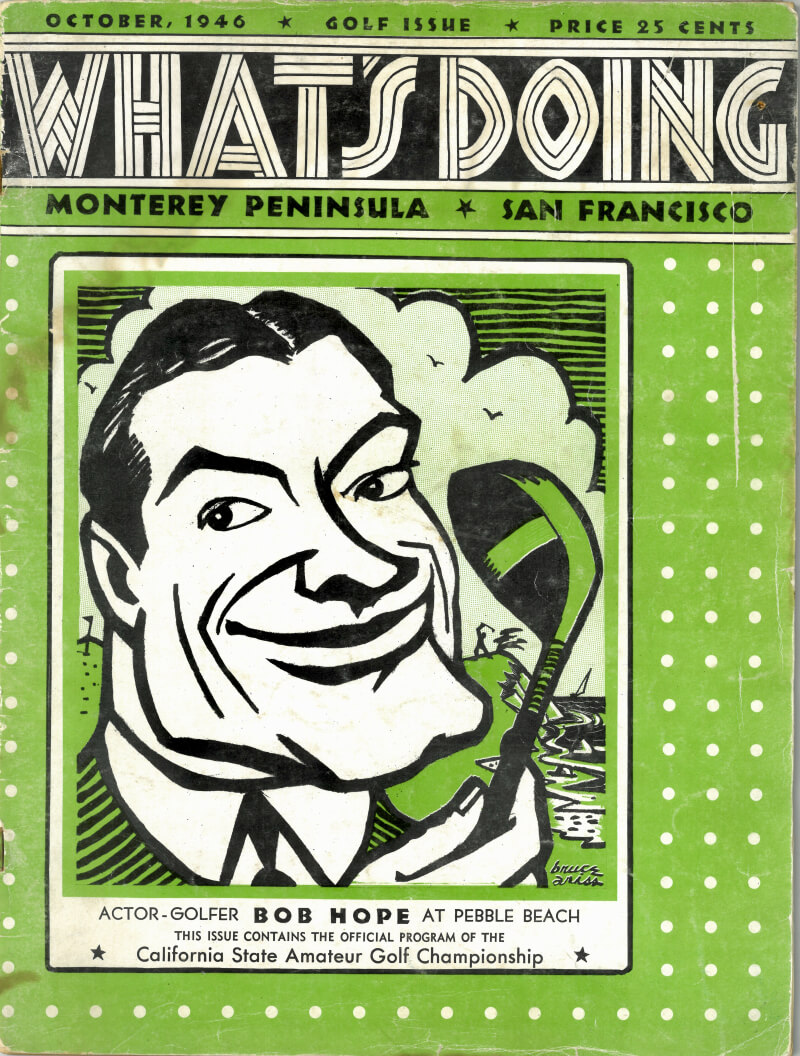
The Crosby Clambake arrived in Pebble Beach and Monterey in 1947. Why three different courses? Crosby argued that they’ve never had so many championship courses, so good, so close together. Hotelling says, “There was focus from Bing on supporting charity organizations from the very beginning of the Clambake, and the term Clambake? No clams are involved. It means a raucous party.” Professionals, amateurs and celebrities swarmed to Monterey County, and the title of “Golf Capital of the World” was used starting in 1947. In 1947, the U.S. Amateur, in 1948, the Women’s Amateur, and in 1950, the LPGA were all hosted in Pebble Beach. In 1958, the final round of the Crosby Clambake at Pebble Beach Golf Links was televised for the first time. The tournament courses have changed over time, with the first change in 1967 when Spyglass replaced Monterey Peninsula Country Club as one of the three courses in the Clambake.
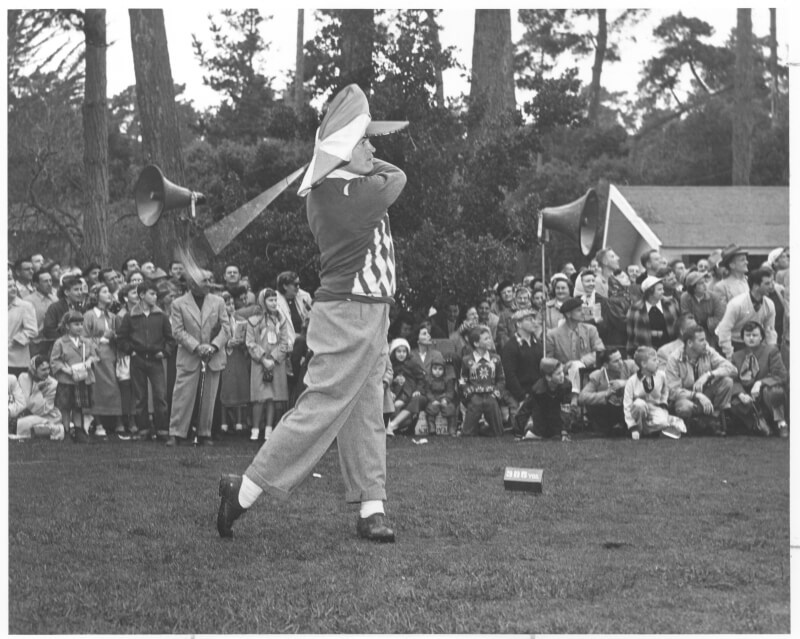
In 1978, Crosby passed away, and the Crosby Clambake name continued through 1985. In 1986, AT&T became the corporate sponsor, and the event was renamed the AT&T Pebble Beach National Pro-Am. Bing’s widow, Kathryn Crosby, removed the “Crosby” name from the event because she was unhappy about linking the Crosby name to a corporate sponsorship.
Pebble Beach Golf Links has a number of memorable moments, including Tiger Woods' 2000 AT&T Pro-Am comeback win, followed by his victory at the 100th U.S. Open, also held at Pebble Beach. With the U.S. Open returning to Pebble Beach again in 2027, history is again in the making.
Explore Pebble Beach & Monterey’s Golf Legacy
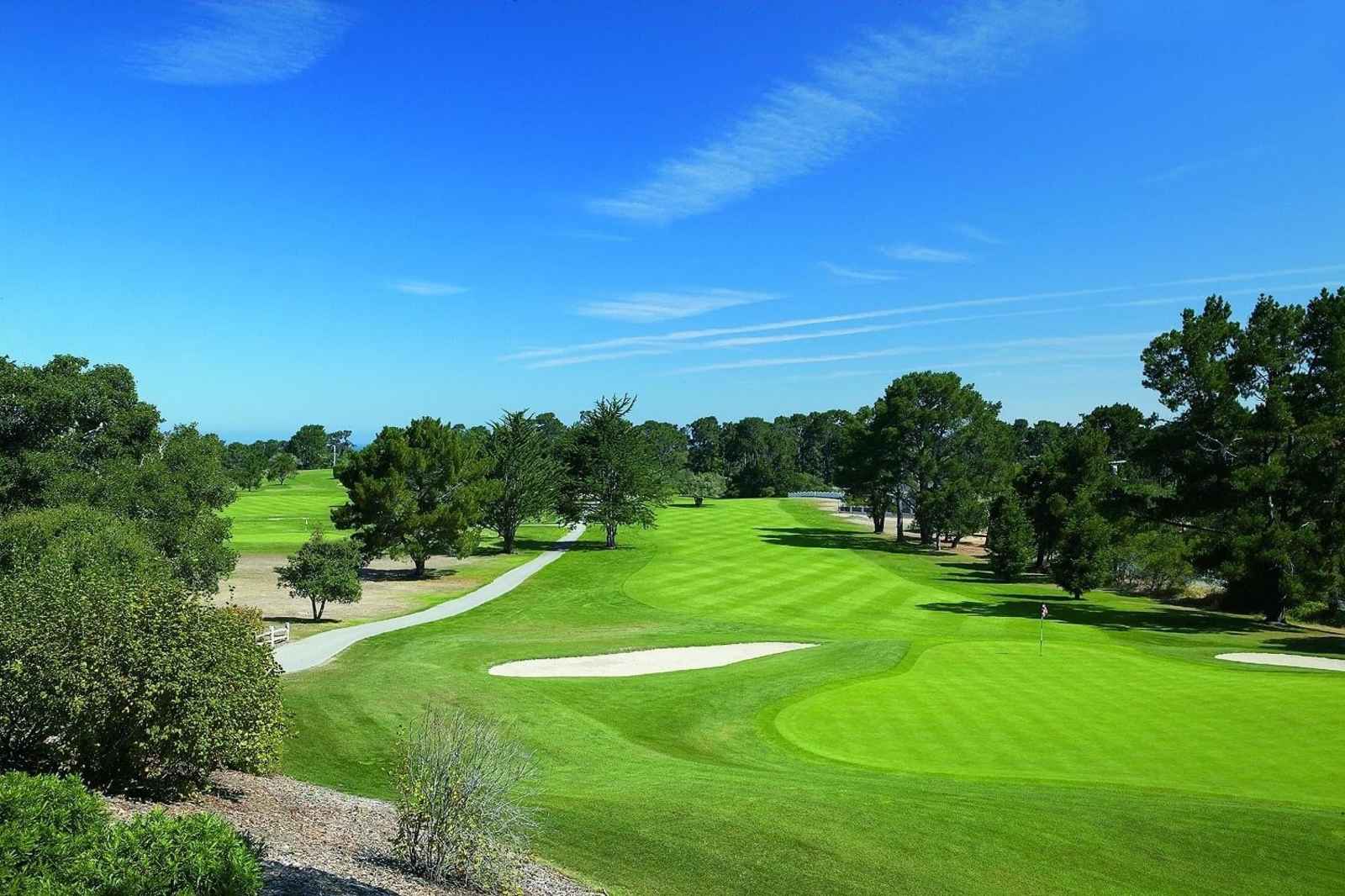
To experience the region’s deep golf history firsthand, visit these iconic courses and landmarks:
- Del Monte Golf Course: Opened in 1897 and expanded to 18 holes in 1903, Del Monte hosted the first California Open and is the oldest continuously operating golf course on the West Coast. Adding to its lore, the grandfather of five-time AT&T Pebble Beach Pro-Am winner Phil Mickelson once caddied here.
- Pacific Grove Golf Links: Consistently ranked among the nation’s top municipal courses, this coastal gem sits beside the Point Pinos Lighthouse. Originally a 9-hole course, it was later expanded to 18 holes with contributions from Jack Neville.
- Poppy Hills Golf Course: A forest-lined championship course owned by the Northern California Golf Association, known for its walkability and thoughtful redesign.
- Spyglass Hill Golf Course: A dramatic coastal-to-forest course consistently ranked among the world’s best and a fixture of championship golf.
- Pebble Beach Golf Links: Widely regarded as the top-rated public course in the United States and host of the U.S. Open in 2027.
- The Tap Room: Enjoy a classic steakhouse experience alongside historic golf memorabilia, including men’s and women’s championship shields from early-20th-century amateur competitions.
- Pebble Beach Visitor Center: Discover exhibits, interactive maps, and artifacts spanning more than a century of Pebble Beach golf history.
- Pebble Beach Timeline: Explore a chronological history of the destination, its courses, and its champions.

Neal Hotelling
Neal Hotelling is a dedicated local history expert with a special interest in Monterey Peninsula golf and John Steinbeck. He is a published writer, speaker and preservation advocate recognized for his role in saving Monterey’s historic Hotel Del Monte.