


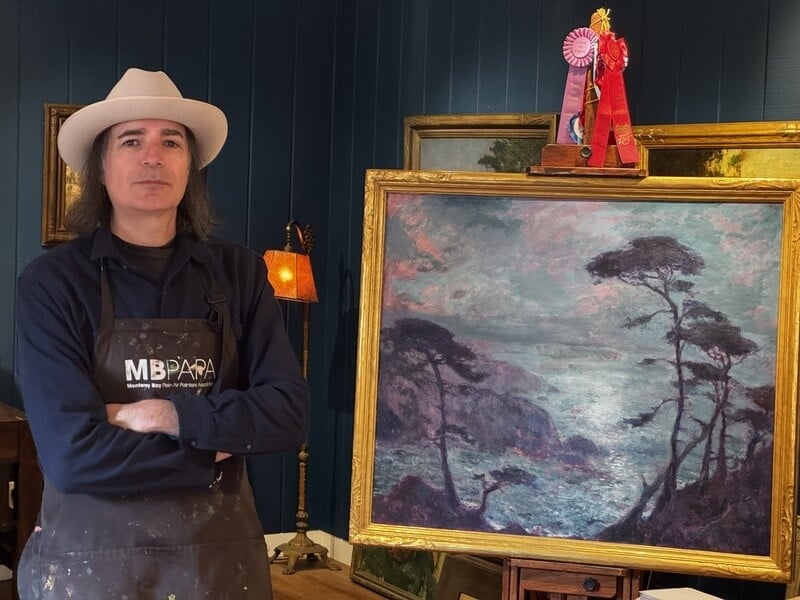
An Interview with Artist & Local Art Historian, Joaquin Turner

Inspired by America 250, Monterey 1000 broadens the lens to recognize histories that long predate the founding of the United States. Over the coming year, this ongoing series will explore those stories, starting with some of the earliest chapters and connecting them to what makes the destination distinctive today.
A Landscape That Inspired a Movement
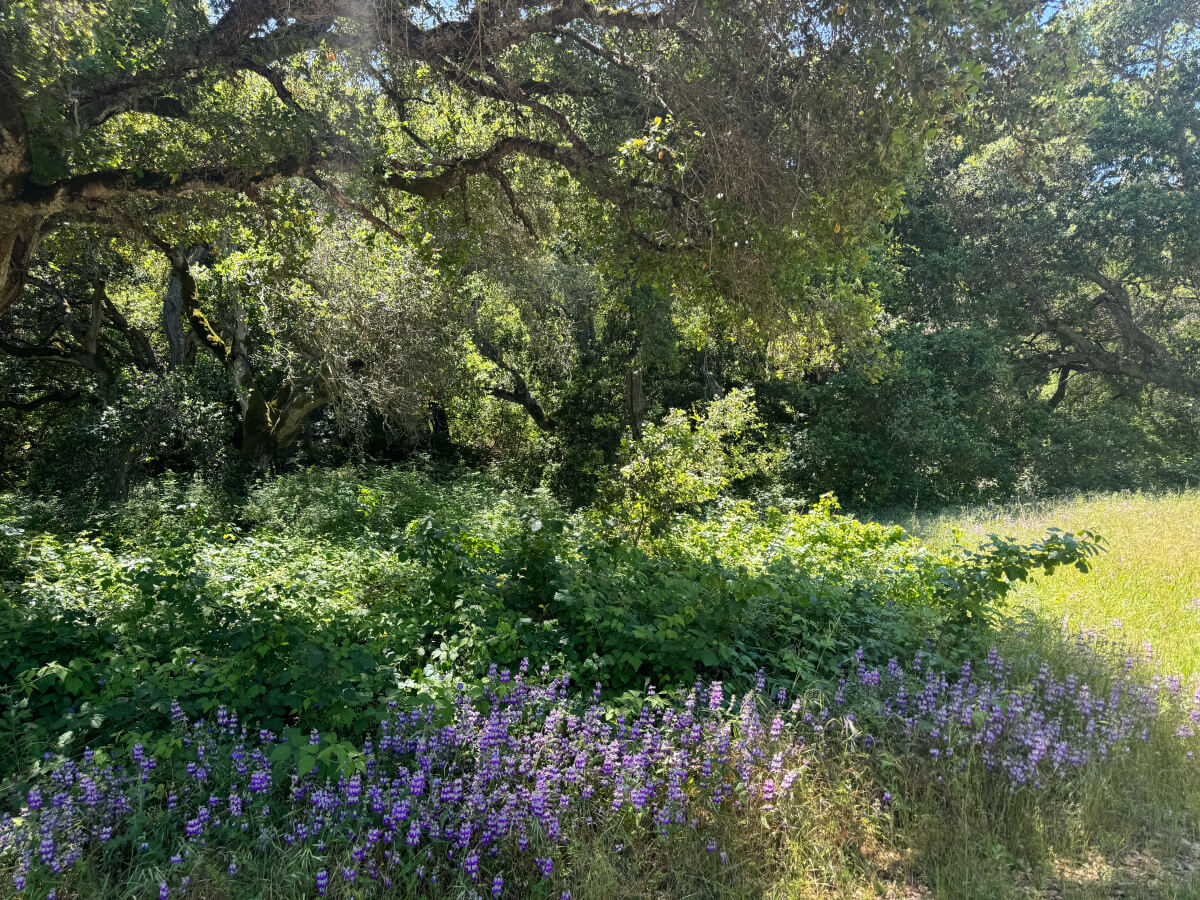
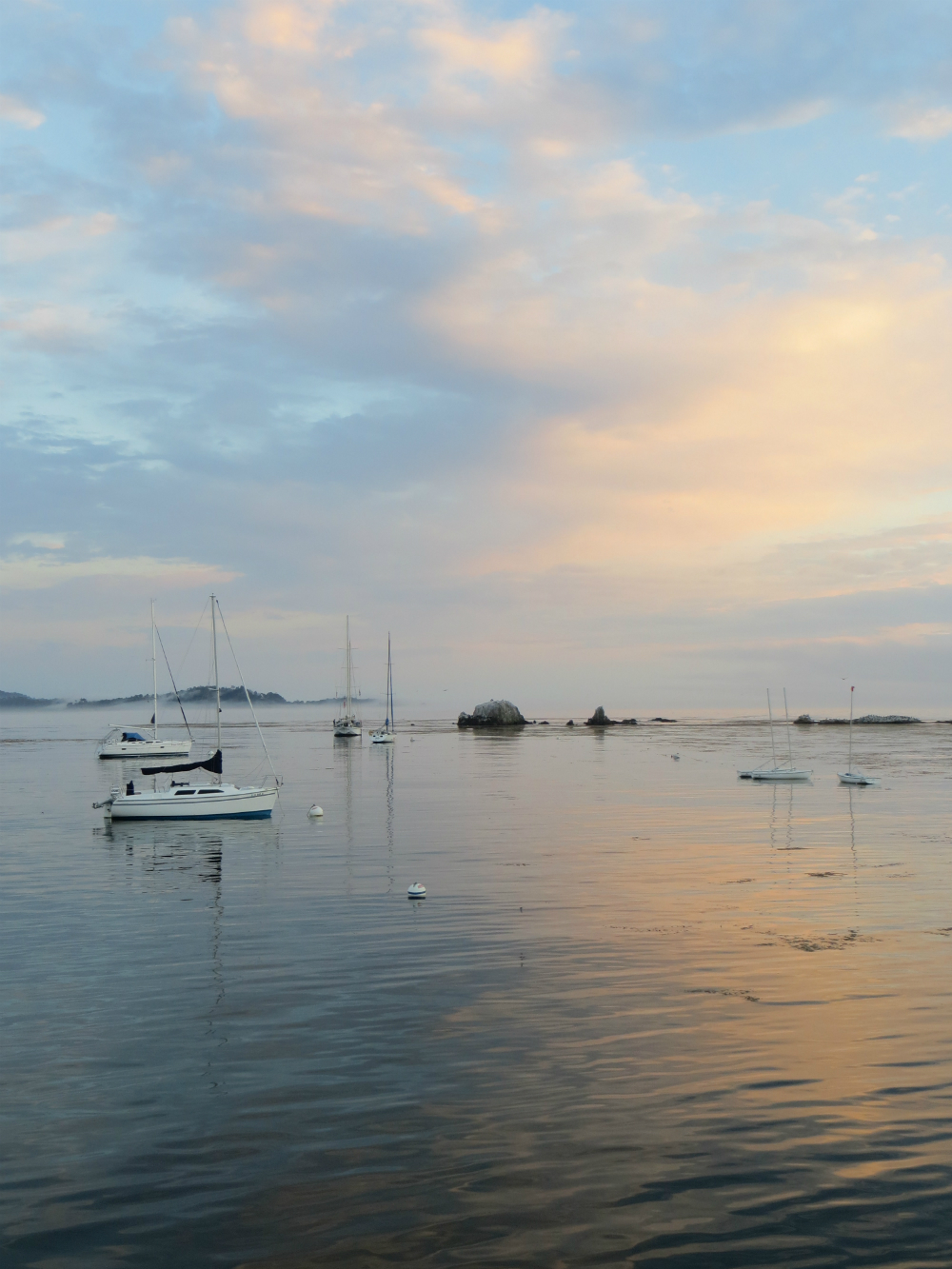
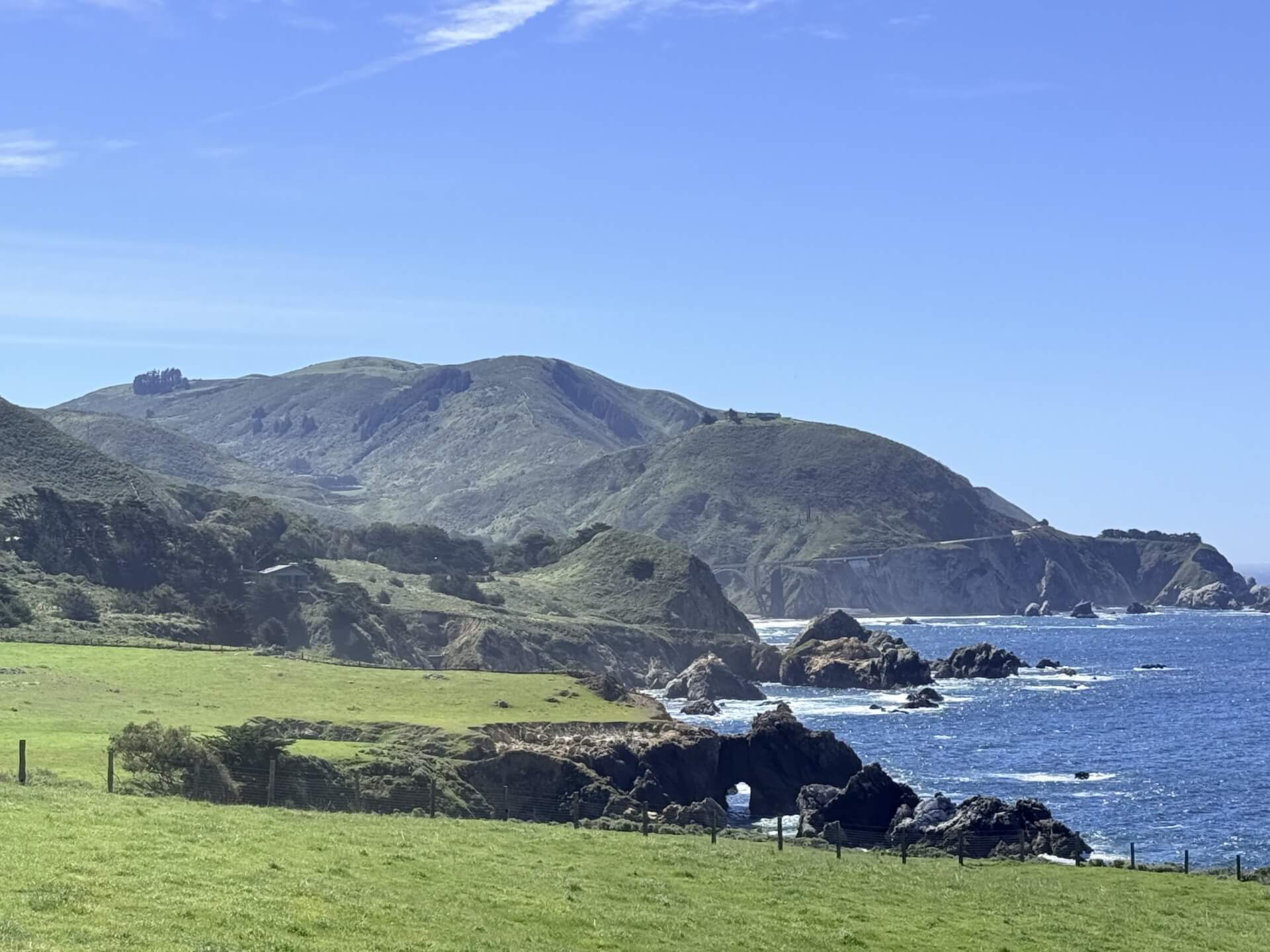
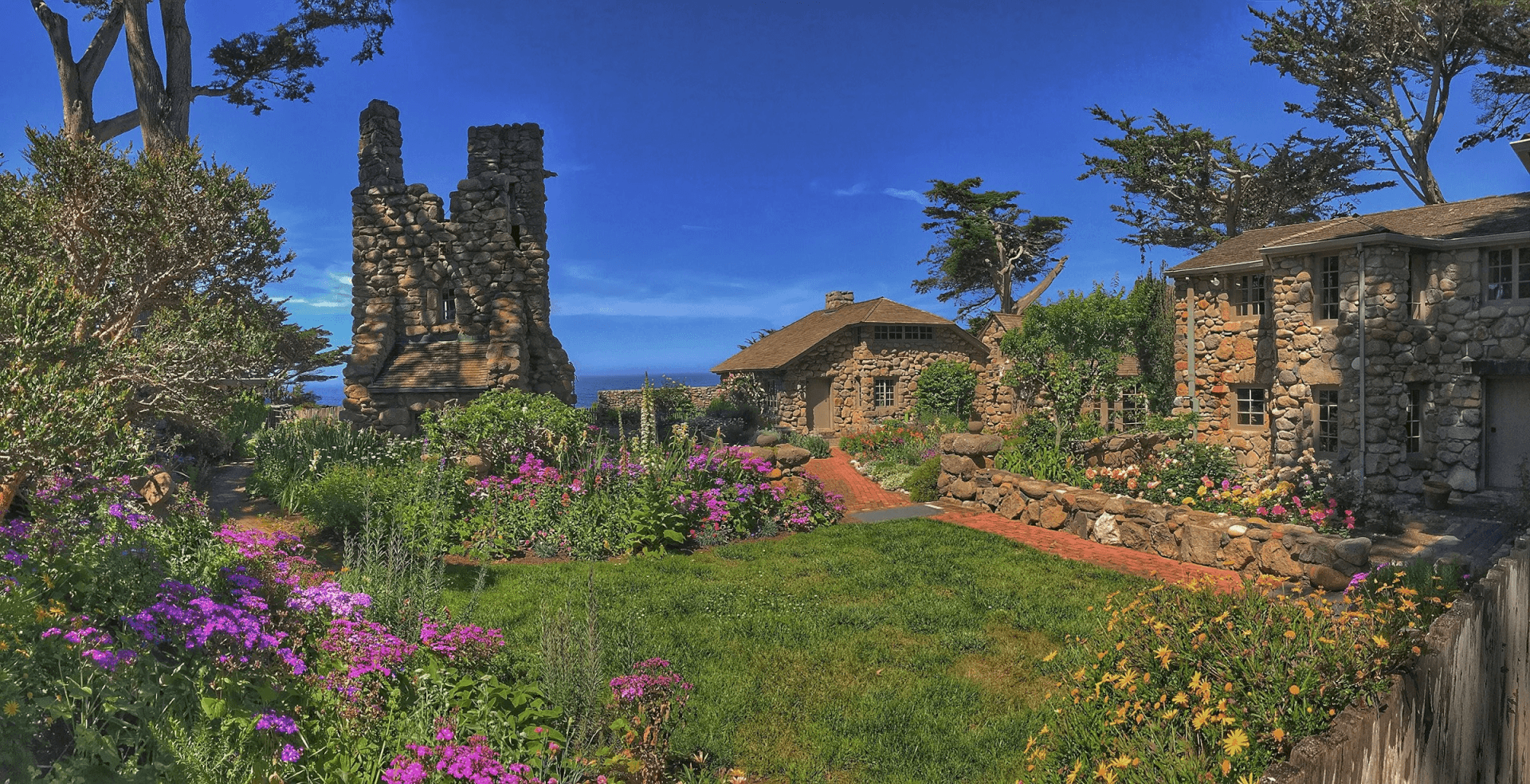
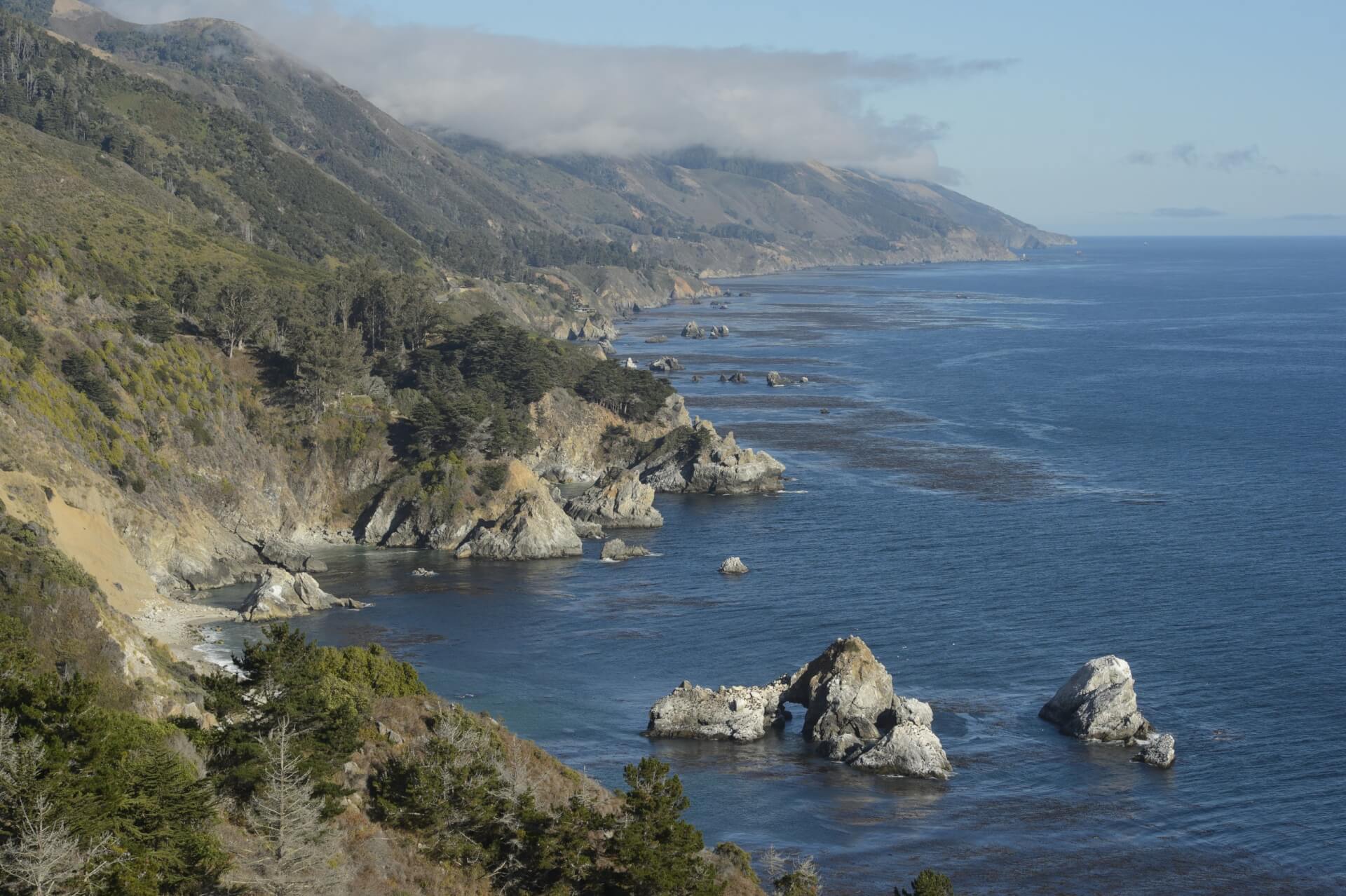
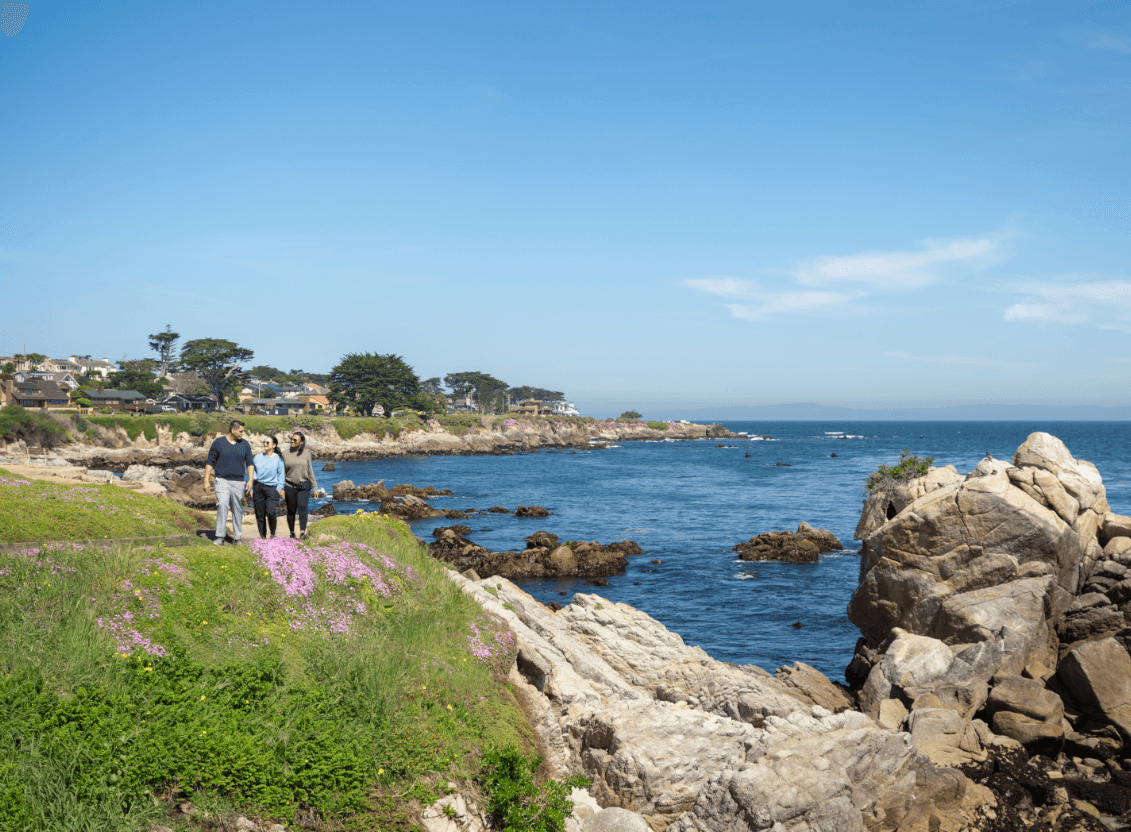
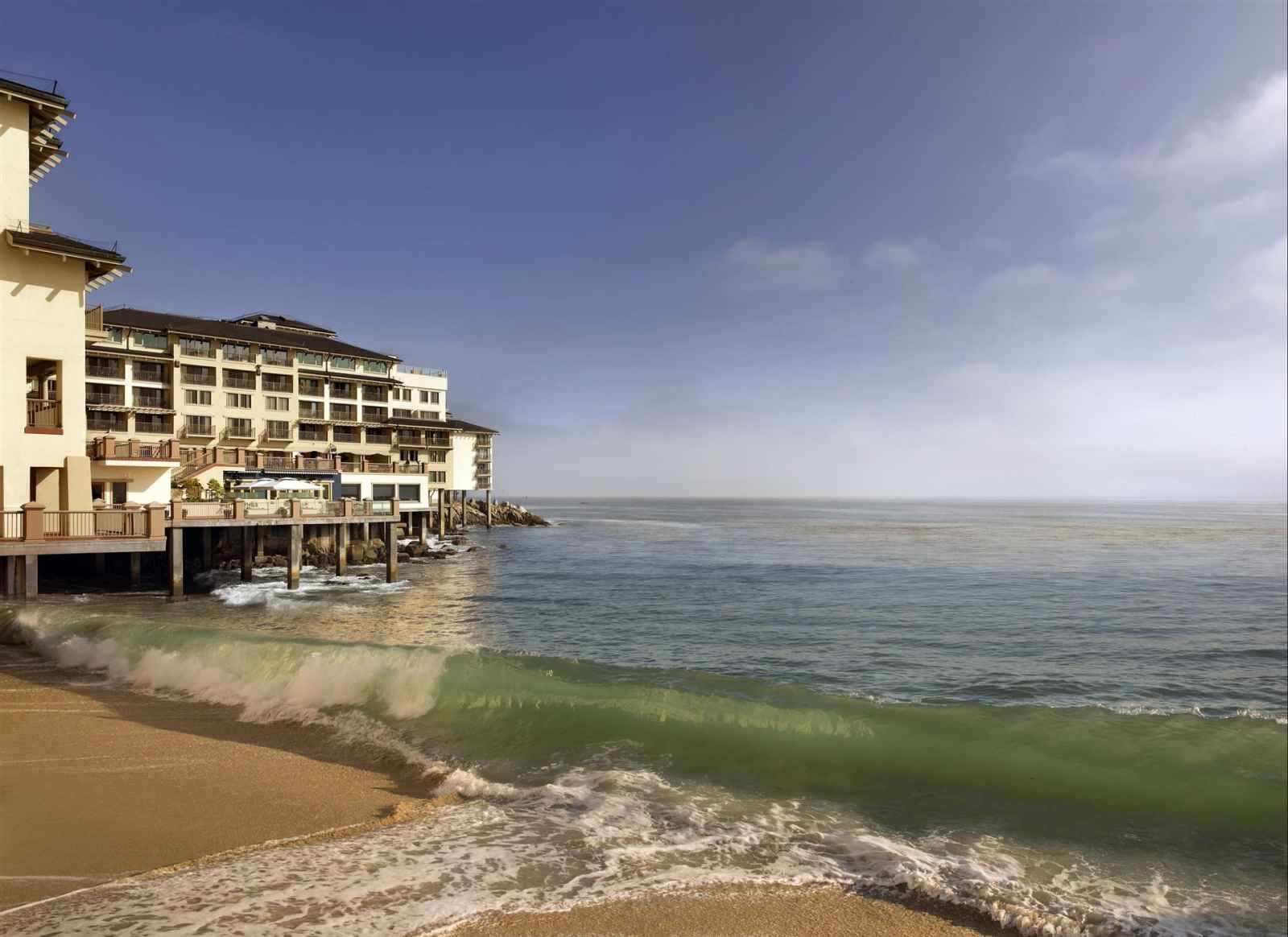
Upon arriving on the Monterey Peninsula, artist Francis McComas famously described it as “the greatest meeting of land and water in the world.” Its dramatic coastline, cypress trees, historic adobe buildings, and Mediterranean-like landscapes have drawn artists to the region for generations.
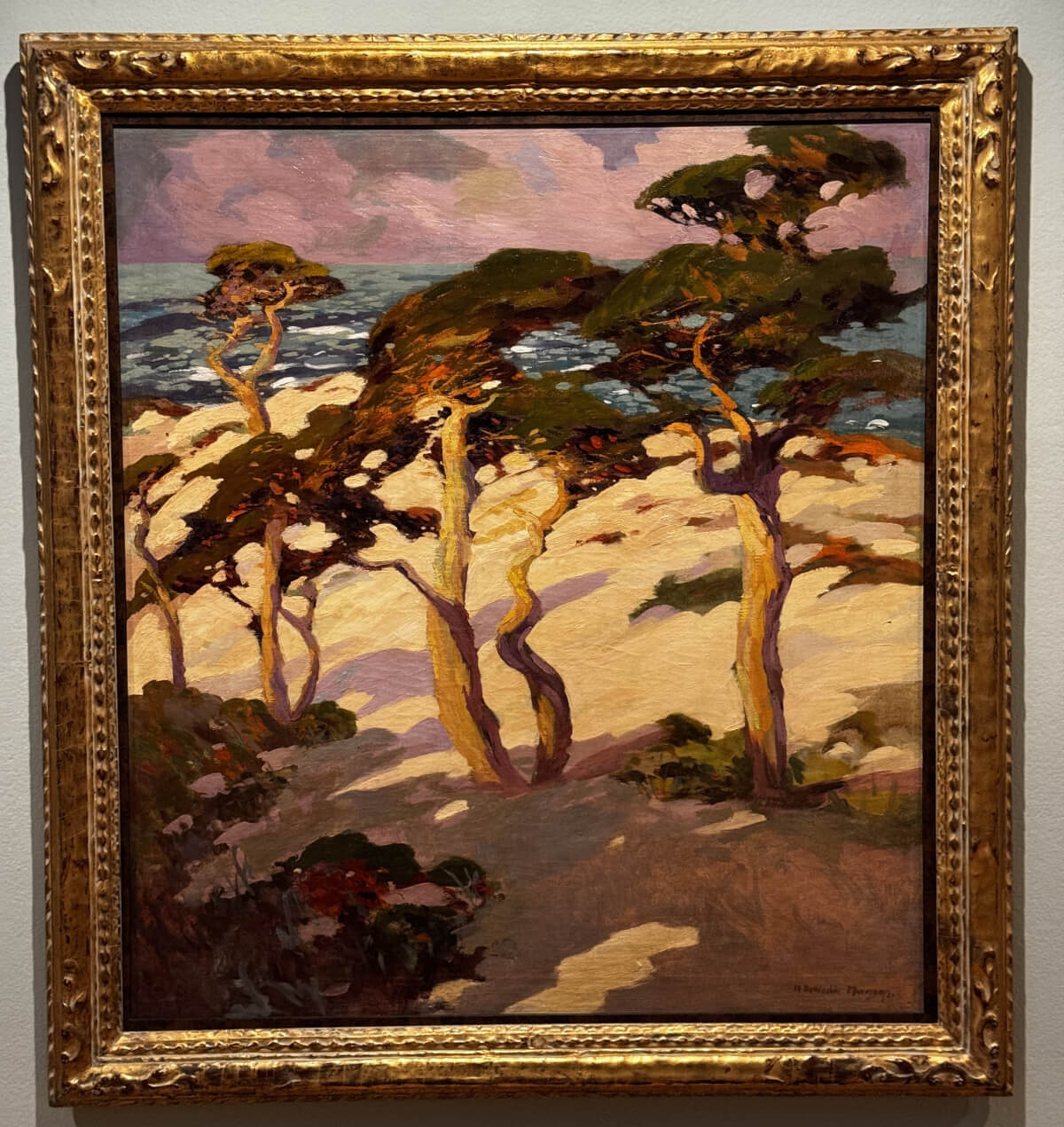
By the late 19th and early 20th centuries, the Monterey Peninsula had emerged as a center of American Impressionism and Tonalism on the West Coast. Today, artists such as Joaquin Turner describe the region as the “Mediterranean of the United States,” pointing to the distinctive combination of natural beauty and historic architecture that continues to inspire creative expression.
But the Peninsula’s reputation as an artistic destination was not accidental. It grew from pioneering painters, improved transportation, an influx of artists displaced by disaster, and a community that deliberately made art part of its identity.
The First Artists Arrive
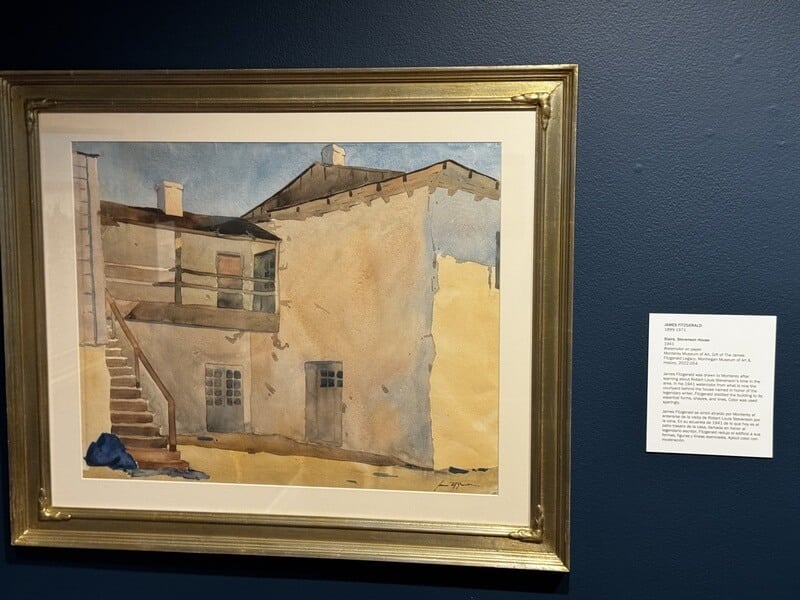
In 1875, artist Jules Tavernier arrived in Monterey and rented a studio at the French Hotel, now known as Stevenson House. He soon established the first art studio on Alvarado Street and began teaching students, including Charles Rollo Peters and Elizabeth Strong, who came from San Francisco to study on the Peninsula.
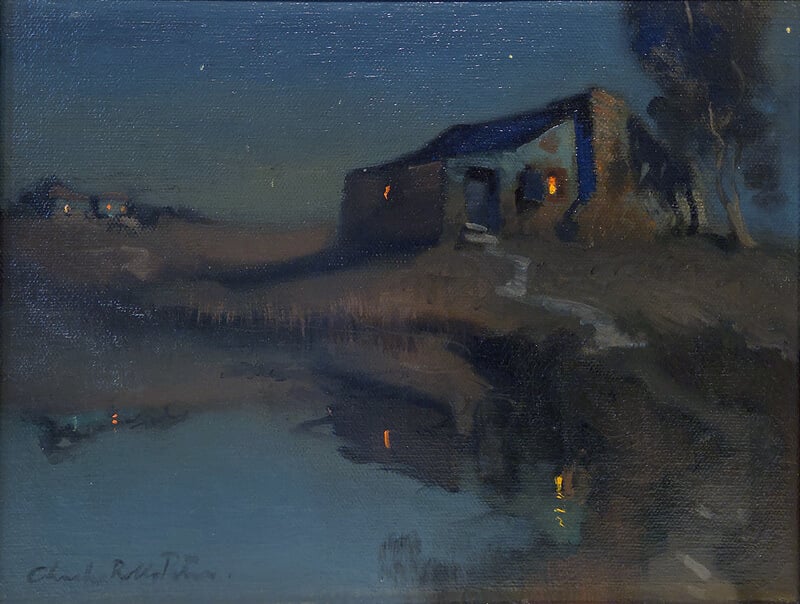
At the time, San Francisco was the center of the West Coast art community. Monterey offered something different: abundant artistic inspiration in a relatively remote coastal setting. The surrounding landscape and the historic Mission San Carlos Borromeo de Carmelo, commonly known as Carmel Mission, became popular subjects for visiting artists.
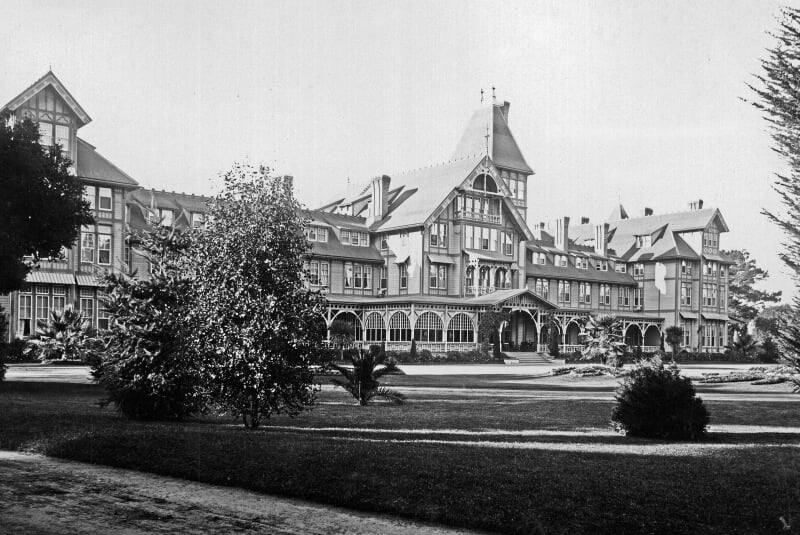
Reaching the area became easier in 1880, when a railroad connected San Francisco and Monterey, bringing visitors to the newly established Hotel Del Monte in approximately two and a half hours. Artists and students followed, drawn by the Peninsula’s growing appeal and opportunities to work outdoors.
Carmel, meanwhile, remained largely undeveloped. Early accounts described rugged roads and untamed landscapes, a far cry from the celebrated artistic destination it would become.
The 1906 Earthquake Changes Everything
The 1906 San Francisco earthquake and subsequent fires devastated the city, destroying much of its built environment and disrupting its established art community. In the aftermath, artists began looking elsewhere for affordable places to live and work.
Monterey and Carmel offered just that. According to Sierra Severson of Carmel Fine Art, the Peninsula became an attractive destination for artists seeking new homes and studios. Their arrival helped accelerate the development of a regional art colony, bringing together painters working in Impressionism, Tonalism, and other styles.
The shift was reflected in the opening of an art gallery at Hotel Del Monte in 1907, the Peninsula's first gallery, according to local art historian Joaquin Turner.
The region’s appeal extended beyond its scenery. Artists found a community where they could live affordably, connect with fellow creatives, and build a life around their work.
Carmel: An Art Colony by Design
Carmel’s transformation into an artistic community resulted from deliberate choices. The Carmel Land Company, led by Frank Devendorf and Frank Powers, sold lots for as little as $5 down and $5 per month, helping attract artists, writers, architects, and poets.
Devendorf championed the vision of a community shaped by creativity and its natural surroundings. Artists influenced Carmel’s architecture, layout, and character, helping establish the distinctive atmosphere visitors recognize today.
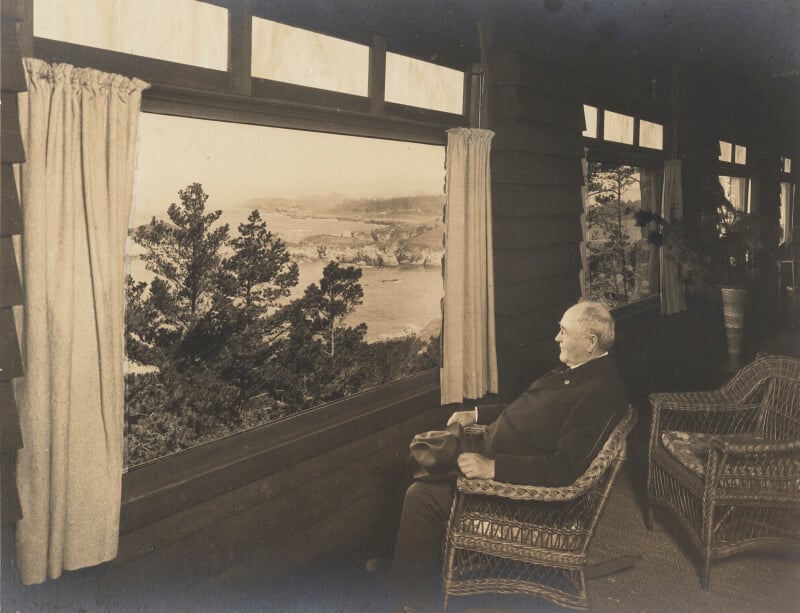
The town’s identity developed through decisions that prioritized its unique character over conventional development. Residents rejected proposals for a pier and street numbering, preserving Carmel’s unconventional, village-like identity.
Artists also helped shape how the public experienced art. Between 1902 and 1927, painters often sold their work directly from their homes, giving visitors opportunities to encounter art in intimate, personal settings.
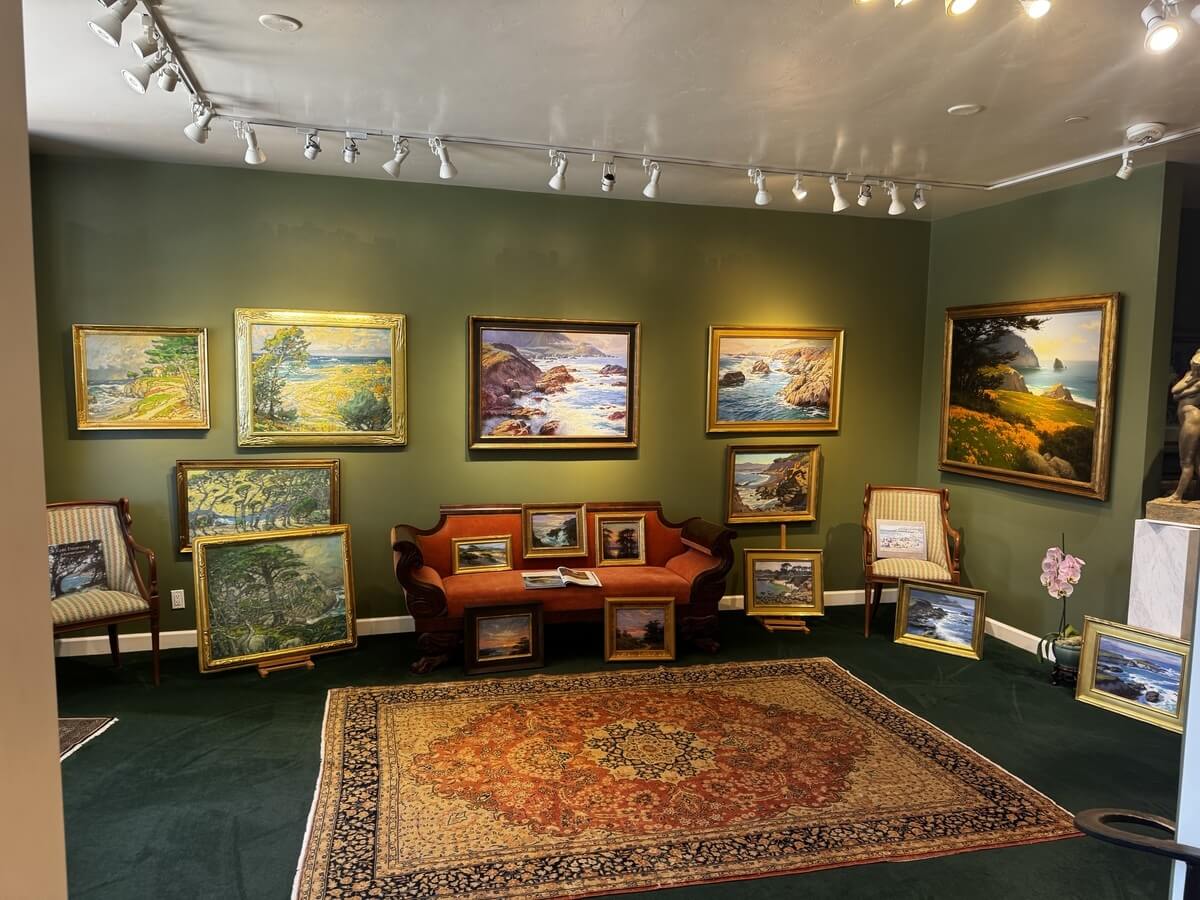
That tradition of direct connection between artists and audiences remains part of Carmel’s appeal.
From Home Studios to Lasting Institutions
As the artistic community grew, galleries and organizations emerged to support its work and preserve its legacy.
In 1927, 19 artists founded the Carmel Art Association at the home of Josephine Culbertson and Ida Johnson's home. Many of the founders also had connections to the Monterey History & Art Association, reflecting the close ties between the creative communities of Monterey and Carmel.
The Carmel Art Association remains Carmel’s longest continuously operating gallery, showcasing artists from across the Monterey Peninsula.
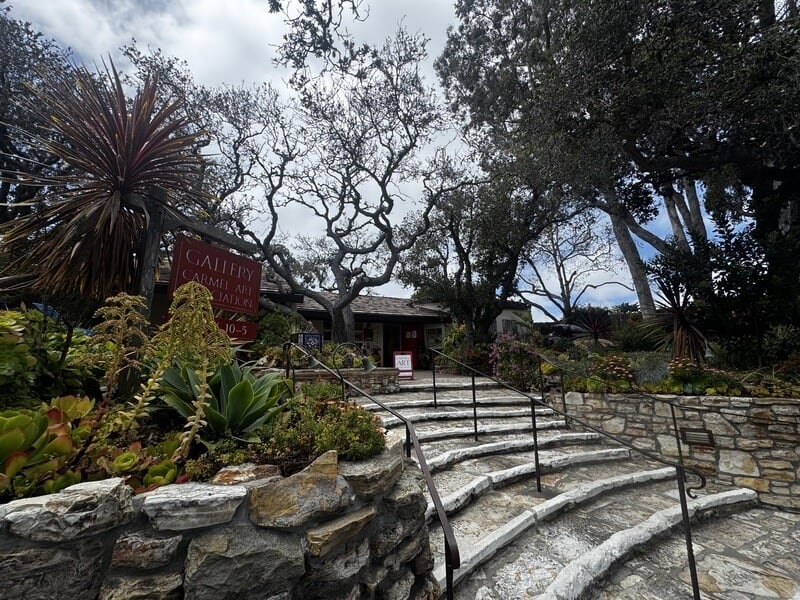
These institutions helped establish a lasting foundation for the region’s arts community, connecting generations of artists while making their work accessible to residents and visitors.
Experience the Art Colony Today
More than a century after the Peninsula’s art colony began to take shape, its creative spirit can still be experienced throughout Monterey and Carmel.
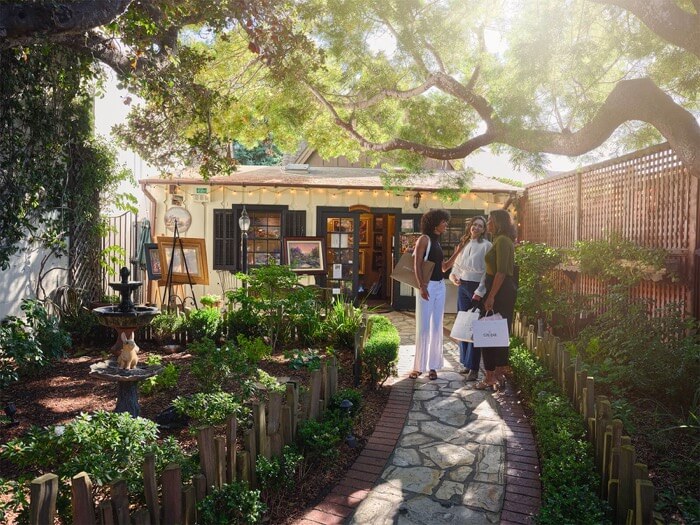
Joaquin Turner, who established the Carmel Art Walk tours, sees these experiences as a continuation of the open-studio culture that once defined the community. At galleries such as Joaquin Turner Gallery and Carmel Fine Art, artwork is displayed in welcoming, intimate settings that encourage visitors to connect directly with the people who create it.
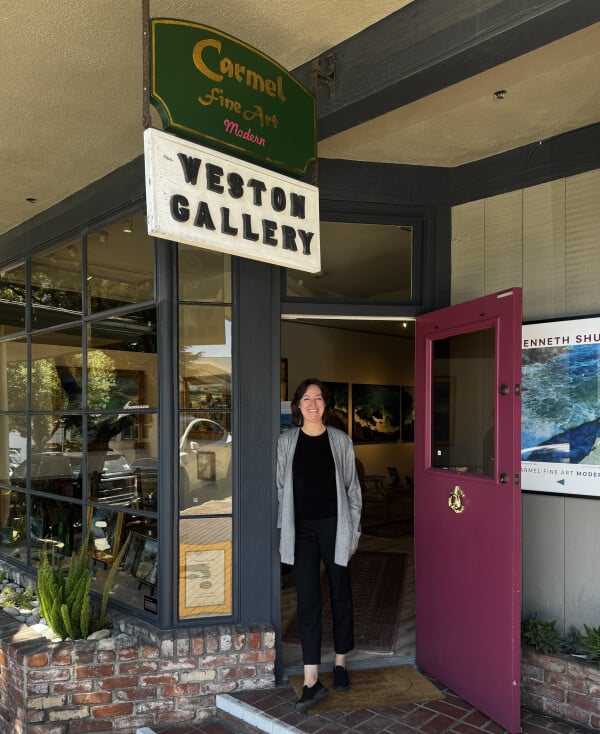
Turner encourages visitors to look beyond Carmel’s most familiar streets and explore its alleyways, independent galleries, and lesser-known creative spaces. Rather than relying on a single museum experience, visitors can meet practicing artists, discover individual perspectives and learn the stories behind the work.
The craftsmanship of early California art is another part of the experience. Turner describes historic artwork as tangible California history, reflecting the human touch and artistic traditions of the late 19th and early 20th centuries. Even the frames surrounding paintings can tell a story, with handcrafted examples demonstrating how presentation and craftsmanship work together.
The Peninsula’s artistic legacy also extends beyond Carmel and Monterey. Murals and other public art in communities such as Sand City and Salinas demonstrate how creative expression continues to evolve throughout Monterey County.
Preserving a Living Legacy
The future of the Monterey Peninsula’s art community depends on more than its historic reputation. Local advocates emphasize the importance of supporting working artists, arts education, museums, and affordable artist housing to ensure that the region remains a place where creativity can flourish.
As Severson notes, Carmel’s distinctive character is not simply a façade. Art has shaped its architecture, preserved historic buildings, and helped establish the identity visitors continue to celebrate.
From Tavernier’s early studio in Monterey to Carmel’s independent galleries and today's public murals, artists have done more than capture the Peninsula’s beauty. They have helped define it.
The Monterey Peninsula’s art colony remains a living part of California history, sustained by the landscape that inspired its beginnings and the creative community carrying its legacy forward.
Where to Experience Early Monterey Art History
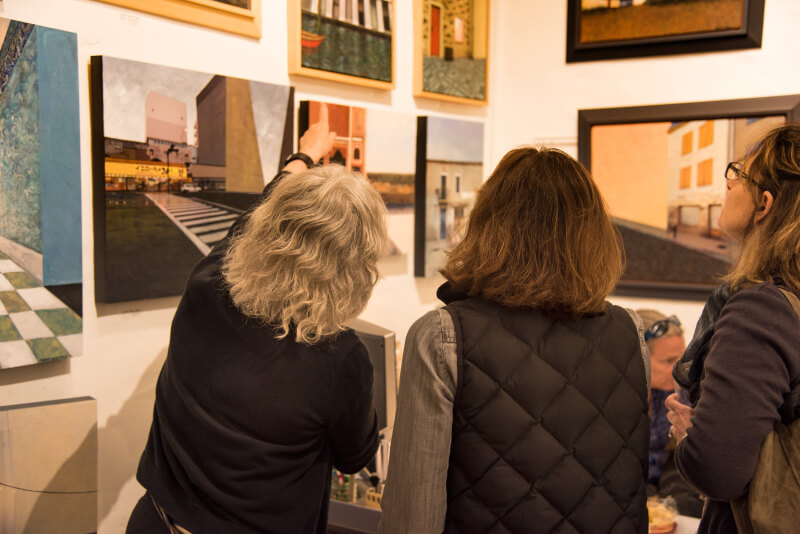
Trotter Galleries: Explore historic and fine art connected to Monterey’s artistic heritage.
Monterey Museum of Art: Discover California art and exhibitions that connect the region’s artistic past with its creative present.
Monterey History & Art at Stanton Center: Explore local history and the cultural stories that shaped the region.
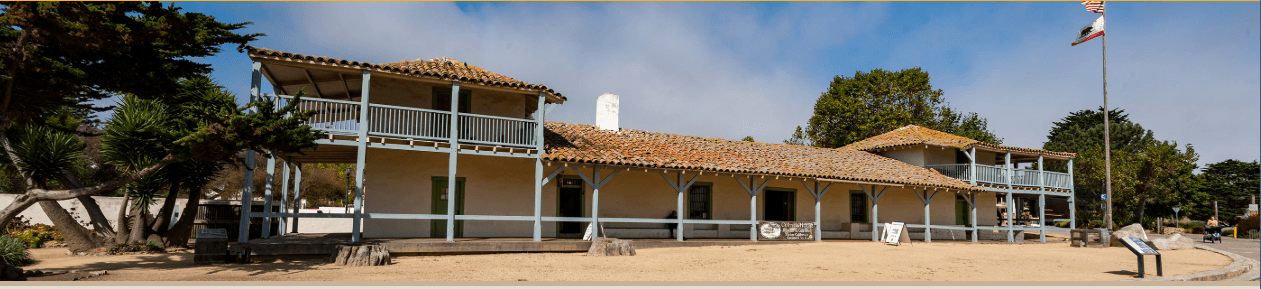
Casa Serrano: Visit one of Monterey’s historic adobe homes and experience a tangible connection to early California.
Carmel Art Association: Discover work by local and regional artists at one of Carmel’s longstanding art institutions.
Carmel Art Walk: Explore Carmel’s galleries and creative spaces while learning about the artists who continue to shape the community.

Brian Edwards
Brian Edwards is the Library & Museums Director for the City of Monterey. He focuses on preserving and sharing our cultural and historic resources for people today. He serves on the board of the Monterey State Historic Park Association and promotes events and information for early California. He has a background in studio art, storytelling, research, and information sharing. He loves to share stories with residents and visitors throughout Monterey County.